
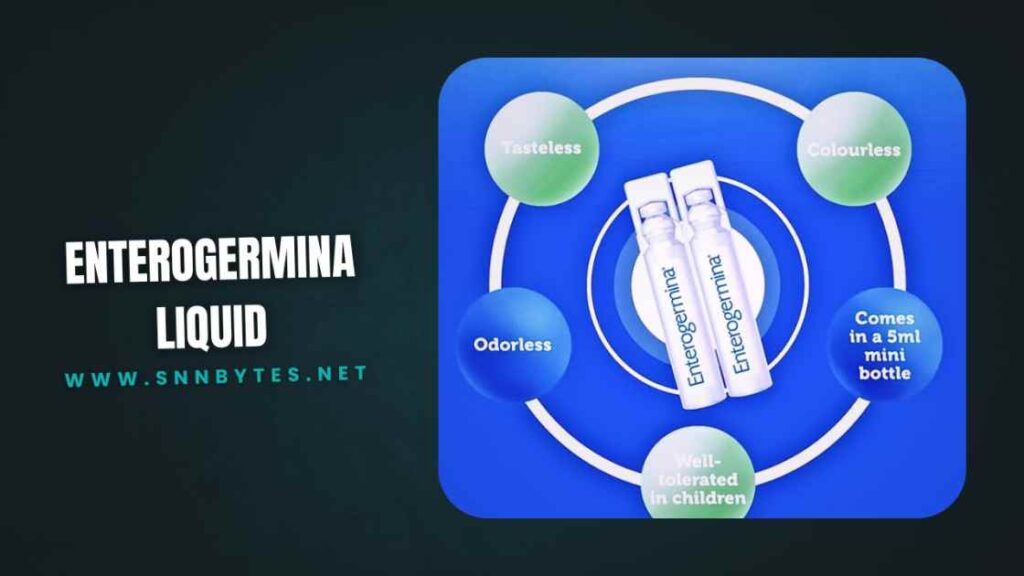
Enterogermina liquid is a well known probiotic oral suspension designed to help restore and maintain a healthy balance of intestinal flora. People commonly use it when their gut flora has been disturbed by factors such as antibiotics, acute diarrhea, food changes, travel or mild infections.
The product is built around spores of Bacillus clausii which are manufactured to survive stomach acidity and reach the intestine alive. This article gives a clear practical guide to what Enterogermina liquid is, how it works when and how to use it, safety considerations, storage and handling comparisons with other probiotics and realistic expectations about benefits. The goal is to provide thorough user friendly information so you can make an informed choice and know when to consult a healthcare professional.
What is Enterogermina liquid
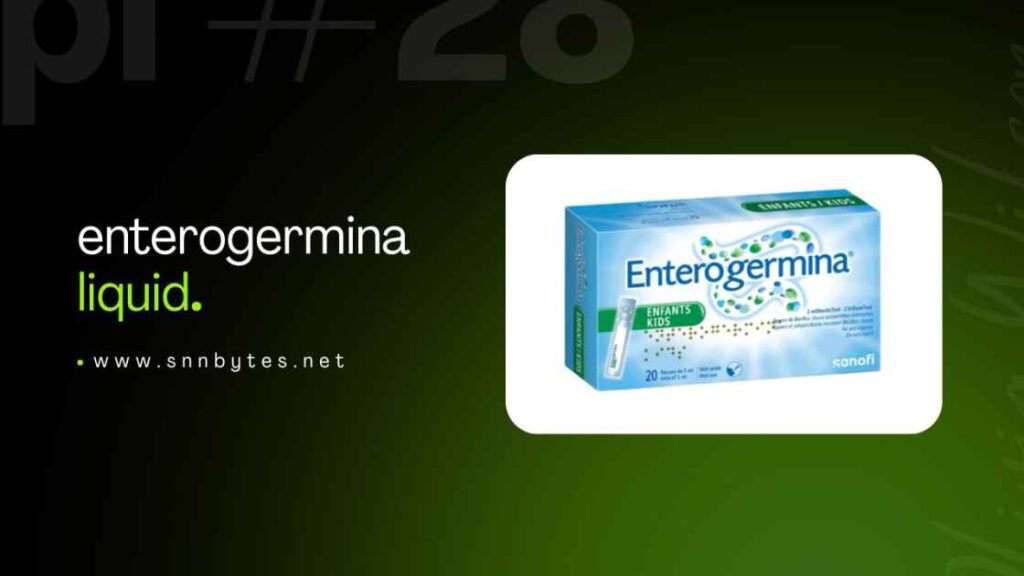
Enterogermina liquid is an oral suspension contained in single dose vials. Each vial delivers measured spores of the probiotic bacterium Bacillus clausii. Because the active ingredient is supplied as spores the product is relatively stable at room temperature and the organism can survive the acidic environment of the stomach to reach the intestine where the spores become active.
The vial format is convenient for people of many ages and is often used by adults, children and infants according to specific product labeling. The primary intended role of Enterogermina liquid is to help reestablish a balanced intestinal microbiota and to support digestion and stool regularity when normal flora are disrupted.
How Enterogermina works
Bacillus clausii is a spore forming microorganism. In the spore form the organism is metabolically inactive and resistant to heat acid and environmental stress. After ingestion the spores transit the stomach and are activated in the intestinal tract where they germinate and begin to interact with the local microbial community and the host immune system.
The proposed beneficial mechanisms include competitive inhibition of harmful bacteria production of antimicrobial substances, modulation of local immune responses and contribution to microbiome balance. Unlike antibiotics probiotics do not directly kill pathogenic bacteria across the board but rather help create conditions that favor healthy microbial communities and faster recovery of normal function.
Formats strengths and typical dosing table
| Product format | Typical concentration per vial or capsule | Typical practical dose guideline |
| Liquid vial 2 billion spores per 5 ml | 2 billion spores per 5 ml vial | Adults commonly 2 to 3 vials per day Children 1 to 2 vials per day Infants follow pediatric guidance |
| Liquid vial 4 billion spores per 5 ml | 4 billion spores per 5 ml vial | Often one vial per day for adults and children depending on label |
| Capsule format 2 billion per capsule | 2 billion spores per capsule | Follow capsule specific instructions provided on packaging |
This table summarizes commonly available format examples and approximate dosing ranges used in practice. Exact concentrations packaging and labeling differ by market and product variant so always follow the label instructions provided with the product or seek pharmacist guidance.
Common uses and clinical contexts
Enterogermina liquid is commonly used for
- Supportive management of acute diarrhea with the aim of helping restore stool consistency and reduce symptom duration.
- Prevention and reduction of antibiotic associated diarrhea by maintaining or restoring beneficial flora during or following antibiotic use.
- Support after episodes of food intolerance mild gastrointestinal infection or travel related digestive upset to help rebalance the microbiome.
It is important to understand that Enterogermina is a supportive therapy. It does not replace rehydration fluids or emergency medical treatment when severe illness or dehydration occurs.
Practical dosing and administration guidance
Dosing varies by formulation and the target age group. The following are practical real world suggestions based on common product presentations.
General practical guidance
- Adults For the common 2 billion spores per 5 ml vial format a typical practical approach is two to three vials per day divided across the day. For the 4 billion format many adults take one vial per day. Always check the local product leaflet.
- Pediatric dosing is often one to two vials per day depending on age and clinician advice. A pediatric specific leaflet should be followed for infants and younger children.
- Infants Some product variants are suitable for infants but dosage should be confirmed with a pediatrician and by reading the infant instructions in the leaflet.
- With antibiotics If you are taking antibiotics take Enterogermina in between antibiotic doses rather than simultaneously to avoid antibiotics reducing probiotic viability. For example if an antibiotic is taken morning and evening take the probiotic at mid day to reduce overlap.
How to take the liquid
- Open the single dose vial according to instructions and drink the contents directly. If desired the liquid can be mixed with a small amount of cool or room temperature liquid such as water or milk but do not mix with hot beverages. Use the vial immediately after opening.
Storage handling and shelf life
Enterogermina liquid vials are generally shelf stable and do not require refrigeration in many markets. However storage conditions can vary by product batch and region so always check the specific storage instructions printed on the packaging.
Typical storage advice includes keeping the product at normal room temperature away from direct sunlight heat sources and moisture. Do not use products past the printed expiry date. If a vial appears damaged, discolored or contaminated discard it. Once opened the contents should be used promptly and not stored for later use.
Safety side effects and special populations
Enterogermina is usually well tolerated by most people including children. Typical mild effects sometimes reported with probiotic use include temporary changes in gas, mild bloating or minor changes in bowel pattern as the gut adapts.
Possible adverse reactions
- Mild transient gas or bloating for a short adaptation period.
- Rare allergic reactions in people who are sensitive to any component of the product. If you see rash swelling or breathing difficulty stop use and seek medical attention.
- Very rare events in severely immunocompromised individuals. People with profoundly weakened immune systems should consult their treating clinician before taking live microbial products.
Special populations
- Infants and young children Many pediatricians use probiotic vials in infants but dose and product suitability should follow labels and clinician guidance.
- Pregnant and breastfeeding people There is limited evidence of harm for many common probiotics but always confirm with a healthcare professional if you are pregnant or breastfeeding.
- Immunocompromised people Consult a specialist before use because live organisms pose theoretical risk in severely immunosuppressed patients.
Interactions and timing considerations
Probiotics are generally compatible with many medicines and foods. The most important practical interaction consideration is antibiotics. To maximize the survival of the probiotic spores avoid taking the probiotic at the exact same time as oral antibiotics. Instead place the probiotic dose between antibiotic doses. If you are uncertain about timing, ask a pharmacist for a simple schedule that avoids overlap.
How Enterogermina compares with other probiotic options

Not all probiotics deliver the same organisms or the same clinical effects. Key differences among probiotics include the species and strain used in total viable count delivery format study evidence and intended use. Enterogermina focuses on Bacillus clausii spores which are robust against stomach acid and convenient in liquid vials. Other probiotics commonly contain Lactobacillus or Bifidobacterium strains which may have specific evidence for conditions such as irritable bowel syndrome prevention of certain infections or chronic constipation.
When choosing a probiotic consider these questions
- What is the target symptom or condition you want to treat or prevent
- Is there clinical evidence for that particular strain or formulation for the intended condition
- Is the delivery format convenient and suitable for the person taking it
A healthcare professional can help match an evidence based strain and dose to your need.
Evidence summary and realistic expectations
Clinical studies suggest Bacillus clausii can reduce the duration of some acute diarrheal episodes and lower the incidence of antibiotic associated diarrhea in certain populations. However results vary by study design, participant age and regional differences. Strain specific evidence matters a great deal in probiotics. Expect supportive benefits rather than an immediate cure. Some people notice improvement within a day or two while for others changes are more gradual.
Practical tips to get the most benefit
- Read and follow the product leaflet for exact dosing instructions for the specific pack you have purchased.
- If using antibiotics, schedule the probiotic dose between antibiotic doses.
- Stay well hydrated and use rehydration solutions when diarrhea causes fluid loss rather than relying solely on probiotics.
- Keep a short symptom diary if you are tracking improvements especially when starting a new probiotic or combining products.
- Ask a pharmacist or clinician when using probiotics for infants, the elderly or people with complex medical conditions.
Common misconceptions
- Enterogermina is not an antibiotic It supports microbial balance but does not replace medical treatment needed for bacterial infections.
- Bigger dose is not always better. Follow the label and professional advice rather than assuming higher counts will give proportionally better effects.
- All probiotics are different. Do not assume benefits for one species or strain apply to others without supporting evidence.
Second tabular reference for dosing by age group
| Age group | Common dose guidance for 2 billion per 5 ml vial format | Practical note |
| Infants | 1 to 2 vials per day | Confirm with pediatrician and leaflet |
| Children | 1 to 2 vials per day | Use age appropriate product variant |
| Adults | 2 to 3 vials per day | Or one vial of 4 billion format if labeled that way |
This quick reference reinforces typical dosing ranges for common formulations. Always rely on the specific product labeling and professional advice.
When to see a healthcare professional
Seek prompt medical help if any of the following occur during a digestive illness or while using a probiotic
- Signs of moderate to severe dehydration such as extremely reduced urine output very dry mouth or severe weakness
- Intense temperature, presence of blood in feces, or acute stomach discomfort
- Symptoms that worsen or do not show any improvement after 48 to 72 hours
- Any signs of allergic reaction such as facial swelling breathing difficulty or widespread rash
- If an infant becomes unusually sleepy refuses feeds has greatly reduced urine output or shows worrying signs contact a pediatrician urgently
Enterogermina may help milder cases but it is not a substitute for medical care when red flags are present.
Real world scenario examples
Scenario A You are taking an antibiotic and worried about diarrhea A reasonable practical plan is to take Enterogermina in between antibiotic doses for the duration of antibiotic therapy and for a short period after. Monitor symptoms and if severe diarrhea develops seek medical care.
Scenario B Your toddler has mild viral diarrhea After checking with the pediatrician you may give the recommended pediatric dose of Enterogermina to support recovery while focusing on hydration and careful monitoring for dehydration.
Scenario C You are preparing to travel and have a history of travel related digestive upset Some people begin probiotic support a few days before travel and continue while away but evidence differs so plan based on past personal response and a clinician recommendation.
Conclusion
Enterogermina liquid is a practical probiotic option for people seeking support to restore intestinal flora after disturbances such as antibiotic use, acute diarrhea or travel related digestive upset. Its strength lies in using Bacillus clausii spores which are stable and able to transit the stomach to reach the intestine. The product is generally safe and convenient for most ages when used according to the product leaflet and professional guidance. Expect supportive benefits rather than an instant cure and remember that probiotics complement not replace essential measures such as hydration and medical care when needed.
For infants, people with complex medical conditions or anyone who is immunocompromised consult a healthcare professional before starting any live microbial therapy. Use product labeling for precise dosing and storage instructions and contact a pharmacist or clinician if you have questions about timing interactions or whether Enterogermina is the most appropriate probiotic for your situation.
Frequently asked questions
What is the active ingredient in Enterogermina liquid
A: The active ingredient is spores of Bacillus clausii supplied as an oral suspension in single dose vials.
Can Enterogermina be taken with antibiotics
A: Yes it is commonly used to reduce antibiotic associated diarrhea. Take the probiotic dose between antibiotic doses rather than at the same time.
Is Enterogermina safe for babies and children
A: Many product leaflets include pediatric dosing and the product is commonly used in infants and children. Always follow the pediatric leaflet and consult your pediatrician for infants.
What is the duration required to observe outcomes
A: Some people notice improvements in stool consistency within a day or two. Response varies by underlying cause severity and individual factors.
Are there side effects I should expect
A: Most people tolerate Enterogermina well. Mild effects like temporary gas or bloating may occur. Severe reactions are rare but allergic events would require stopping the product and seeking care.
Can people with weak immune systems take Enterogermina
A: People with significant immune suppression should discuss probiotic use with their specialist because live organisms are not always appropriate in severely immunocompromised people.
How should Enterogermina be stored and handled
A: Store at room temperature away from direct sunlight and heat sources. Use the vial immediately after opening and check expiry dates. Discard damaged or expired vials.
Can Enterogermina replace medical treatment for severe diarrhea
A: No Enterogermina may support recovery in mild to moderate cases but severe diarrhea with dehydration, severe pain in blood in stool or high fever requires urgent medical attention.