

Steam irons have become the go-to tool for people who want crisp, presentable clothes with minimal fuss. They remove wrinkles faster than dry irons, tame stubborn creases, and often refresh garments that you’d otherwise have to rewash.
Whether you’re getting ready for work, prepping outfits for travel, or caring for delicate fabrics, a good steam iron for clothes saves time and improves garment longevity. This guide dives deep features, types, how-to, maintenance, safety, and pro tips — so you can choose and use a steam iron that truly smooths fast.
What a steam iron does
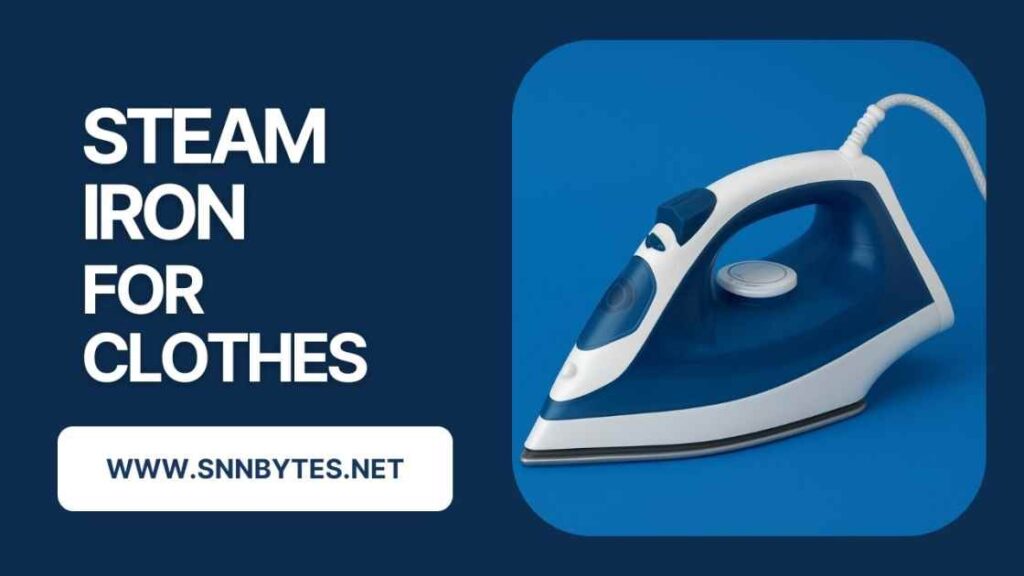
A steam iron combines heat, pressure, and moisture. The iron’s hot soleplate softens fibers while fine steam penetrates the weave, relaxing creases. For many fabrics this is dramatically faster than pressing with a dry plate alone. Steam helps reshape fibers without the need for repeated passes, and vertical steam capability lets you de-wrinkle hanging garments, curtains, or suits on the spot.
How steam irons for clothes work — the simple science
At the heart of every steam iron is a water reservoir, heating element, and delivery system (holes in the soleplate and sometimes a burst-of-steam feature). When the water heats it becomes pressurized steam or bursts out as a spray depending on design. The combination of heat and moisture reduces the internal friction of fibers, allowing them to settle flat. That’s the mechanical reason steam irons “smooth fast.”
Fourth paragraph (detailed comparison tables and quick-reference)
Below are two quick tables to help you compare common steam-iron types and match features to your needs. Use these as a snapshot when shopping.
Table 1 — Steam iron types and quick comparison
| Type | Best for | Steam power | Water tank | Pros | Cons |
| Traditional steam iron | Everyday clothes | Medium | Small to medium | Affordable, compact, easy to store | Shorter continuous steam time |
| Steam generator iron | Heavy use, frequent pressing | High | Large separate tank | Best steam output, fast smoothing, long sessions | Bigger, more expensive |
| Travel steam iron | Trips, quick touch-ups | Low | Tiny | Ultra-portable, dual-voltage often available | Less powerful, small tank |
| Garment steamer (handheld/tower) | Delicates, vertical steaming | Variable | Medium to large | Gentle on fabrics, great for curtains | Not as crisp as soleplate ironing |
Table 2 — Feature quick guide (what matters depending on use)
| Feature | If you want speed | If you need precision | If you travel |
| High steam output | Essential | Helpful | Not necessary |
| Large water tank | Helpful | Not needed | Problematic |
| Ceramic/steel soleplate | Good balance | Look for fine-tip soleplate | Durable small plate |
| Temperature settings | Helpful | Essential | Basic is fine |
| Anti-scale feature | Nice but optional | Recommended | Optional |
Why choose a steam iron for clothes over other options

Steam irons combine precision and speed. Compared to garment steamers, they generally produce a crisper finish ideal for shirts, collars, seams, and trousers. Compared to dry irons, the addition of steam often means fewer passes across the fabric and less time spent. For heavy-duty users (tailors, stylists, households doing many clothes at once), steam generator irons deliver the fastest, most consistent results.
Key features to focus on when buying a steam iron for clothes
Choosing the right steamer depends on priorities. Below are the most important features and what they mean in everyday use.
Steam output and burst-of-steam
Steam output (usually measured in g/min) determines how much moisture the iron pumps into fabric. Higher continuous output smooths faster. The burst-of-steam (or steam shot) is helpful for stubborn creases; it gives a concentrated blast of steam to relax thick fibers.
Soleplate material and design
Soleplates come as stainless steel, ceramic, or non-stick treatments. Ceramic plates glide well and distribute heat evenly. Look for a soleplate with evenly spaced steam holes and a pointed tip for collars and seams.
Temperature control and fabric settings
An iron that offers clear temperature and fabric settings (cotton, wool, silk, synthetics) reduces the guesswork and lowers the risk of scorching. Some models add an automatic fabric sensor; others rely on manual settings. If you iron mixed loads, precise settings matter.
Water tank capacity and refill convenience
Larger tanks mean fewer refills. For quick touch-ups, a small tank is fine; for ironing many garments, a larger tank or detachable tank helps. Look for easy-fill openings and a visible water level.
Anti-scale and self-cleaning
If you live in a hard-water area, anti-scale features (replaceable cartridges or self-clean cycles) extend the iron’s life. Descaling is essential for high-steam units.
Vertical steam
This lets you steam hanging garments or curtains. Not all irons do it well; choose one with sufficient steam pressure if you plan frequent vertical steaming.
Safety features
Automatic shutoff after a period of inactivity is a critical safety feature. Also check for stable heel-rest design and heat-resistant cords.
Types of steam irons explained in detail
Traditional steam iron (most common)
These are compact units with an integrated water tank. They’re great for most households and offer fair steam outputs. If you iron occasionally or have a small laundry load, a traditional steam iron balances price and performance.
Steam generator iron (power user choice)
Steam generator irons use a separate boiler-like tank that produces higher pressure and continuous steam in larger quantities. The result: wrinkles disappear faster, and you can steam for longer without refilling. They’re bulkier but unbeatable if speed and volume matter.
Handheld garment steamer
While not a traditional iron, garment steamers are excellent for delicate fabrics, drapes, and quick vertical touch-ups. They don’t press creases as crisply but are gentle and quick.
Travel steam iron
Small footprint, often dual-voltage. Best for packing into luggage. They compromise on tank size and continuous steam but are convenient for frequent travelers.
Fabric-by-fabric ironing guide — what every steam iron user should memorize
Different fabrics respond differently to heat and steam. Use the fabric label as your primary guide and follow these practical tips.
Cotton and linen — These tolerate high heat and steam. Iron while slightly damp or use a strong steam output for fastest results. Use a high setting and move the iron steadily.
Wool — Use medium heat and protect fibers with a pressing cloth. Steam helps reshape wool without flattening texture. Avoid direct high-heat pressure.
Silk — Low heat, low steam. Iron silk inside out to avoid shine. If in doubt, use a pressing cloth and minimal steam.
Synthetics (polyester, nylon) — Low to medium heat and modest steam. Too much heat will melt or shine the fabric.
Denim and heavy cotton — High heat with strong steam or a steam generator iron. Iron on the reverse if you want to reduce shine.
Delicates (lace, chiffon, sequins) — No direct steam shots; use a low setting and a cloth barrier. Consider a garment steamer instead.
Practical step-by-step: How to iron a shirt with a steam iron for clothes
Short crisp steps for a quick, professional finish.
- Prepare the shirt — Check labels, empty pockets, button top buttons to keep shape. Slightly damp shirts iron more easily.
- Set the iron — Choose the correct temperature for the fabric. Fill the tank and allow the iron to reach the set temperature.
- Collar first — Iron the underside outward, then the top side. Use the point of the soleplate for corners.
- Cuffs and sleeves — Unbutton cuffs and iron inside first. For sleeves, press from shoulder to cuff to avoid creases; use sleeve board if available.
- Back and front — Use even strokes with steam. For pleats, iron along the fold line and finish with a steam burst.
- Final touch — Hang the shirt immediately to set the press.
Maintenance and cleaning — keep your steam iron working fast
Regular maintenance keeps steam irons performing. Here’s a simple program.
Daily/after-use
Empty the water tank (prevents standing water scale). Wipe the soleplate with a soft cloth once cool.
Weekly
Use distilled water if possible to reduce scale. If you must use tap water, run the self-clean cycle if available.
Monthly or as-needed
Descale using the manufacturer’s method. Remove mineral buildup from steam holes with a soft pin if necessary (when cool and unplugged). Replace anti-scale cartridges as recommended.
Soleplate care
Avoid abrasive cleaners. For sticky residues, use a paste of baking soda and water, apply gently with a soft cloth, and wipe clean.
Troubleshooting common problems
Iron not steaming
Check water level, ensure iron is hot enough, and that steam control is on. If hard water deposit blocks holes, descale.
Water leaking from soleplate
Usually caused by ironing at low temperature with high steam selected. Increase temperature or empty water and use a higher temp for steaming.
Soleplate sticking
Clean with manufacturer-recommended cleaner. Avoid ironing over zippers, buttons, or synthetic fabrics that can melt.
Iron spits or sputters
This can happen with mineral-laden water. Run a steam burst on a towel to clear the channel, and descale if needed.
Energy use and eco tips for steam iron users
Steam irons can use significant power during heat-up. Save energy with these tactics:
- Iron full loads at once rather than multiple short sessions.
- Use a steam generator iron for larger loads — it’s often more energy-efficient per garment.
- Turn off the iron during breaks and use automatic shutoff features if available.
- Use distilled water to reduce descaling frequency and maintain efficiency.
Safety tips — don’t risk burns or fires
- Never leave a hot iron unattended. Rely on automatic shutoff but don’t be complacent.
- Always place the iron on a heat-resistant base.
- Keep cords away from the ironing path and out of reach of children.
- Use an iron with stable heel and tip rests.
- Allow the iron to cool completely before storing.
Choosing the right steam iron for clothes — a buyer’s checklist
Use this checklist while shopping — it’s easy to miss small but important things.
- Does it have a powerful continuous steam rating and burst-of-steam?
- Is the soleplate material and tip design suitable for your clothing types?
- Is the water tank size appropriate for how often and how many items you iron?
- Does it have anti-scale features or a removable filter?
- Is vertical steam needed?
- How heavy is the unit — is storage or portability a concern?
- Does it have automatic shutoff and safety certifications?
- Are replacement parts (like filters) commonly available?
- What is the warranty?
Professional tips to get clothes magazine-flat fast
- Iron clothes when they’re slightly damp it saves time.
- Work from low-friction fabrics to heavier ones to keep the soleplate clean.
- Use a spray bottle for stubborn spots if your iron’s spray isn’t strong.
- For crisp shirt collars and cuffs, apply a burst of cool steam then press immediately.
- Steam pants hang vertically after pressing to relax any fold lines before final touch-ups.
When to replace your steam iron
An iron should last many years if maintained. Replace it when: steam performance drops despite descales, internal parts corrode, or when safety features fail. Also consider replacement if repair costs approach the price of a new unit.
Common myths about steam ironing — busted
Myth: All steam is the same. Not true — pressure, volume, and steam temperature affect how fast and how deeply steam penetrates fibers.
Myth: Higher heat alone smooths faster. Heat helps, but without vapor the fibers can scorch without relaxing. Steam is the multiplier.
Myth: You can’t iron delicate fabrics. You can — with low temp, a pressing cloth, or a garment steamer.
What else you can do with a steam iron for clothes
- Sanitizing light bedding or curtains with vertical steam.
- Fast refresh of jackets and suits between dry-clean visits.
- Prepping fabric for sewing or hemming by pressing crisp seams.
Use steam responsibly and avoid delicate trims that could be damaged by direct heat.
Final thoughts
A steam iron for clothes is a practical investment in appearance and fabric care. Choose depending on volume, fabric types, and storage options. If you iron daily or handle many heavy items, a steam generator iron pays off in time saved.
For occasional stain-and-crease fighting, a compact steam iron or garment steamer probably does the trick. Maintain it and respect safety features, and your iron will smooth clothes faster and last longer.
FAQ — Frequently Asked Questions
What separates a steam iron from a steam generator iron?
A. A steam iron has an integrated reservoir; a steam generator iron has a separate boiler or tank producing higher pressure steam. Generators deliver more continuous steam and are better for heavy use, while standard steam irons are compact and great for occasional ironing.
Can I use tap water in my steam iron for clothes?
A. You can, but if you live in a hard-water area it accelerates scale build-up. Distilled or demineralized water is recommended to extend the iron’s life and keep steam holes clear. Check the manufacturer’s instructions.
How frequently do I need to remove scale from my steam iron?
A. Descale as recommended by the manufacturer or when steam output drops or sputtering occurs. In hard-water areas, monthly or every few uses may be necessary; in soft-water areas, less frequently.
Is vertical steam as effective as ironing on an ironing board?
A. Vertical steam is excellent for removing wrinkles from hanging garments and delicate fabrics, but it won’t create the same sharp creases or pressed finish that a soleplate can. For crisp finishes, use the iron on the board.
What is the best soleplate material for a steam iron for clothes?
A. Ceramic and stainless steel are popular. Ceramic glides well and distributes heat evenly; stainless steel is durable and can be polished. Avoid scratched or pitted plates they snag fabric.
How do I prevent shiny marks on clothes when ironing?
A. Use lower temperatures, iron inside out, or use a pressing cloth. Shiny marks occur when the soleplate is too hot or steam condenses on the fabric surface. Adjust settings and test on an inconspicuous area.
My iron leaves water spots on clothes — how do I stop that?
A. Water spots happen when the soleplate is too cool for the selected steam setting, or if the iron’s steam holes are partially blocked. Increase the temperature a bit, empty the tank between sessions, and descale if needed.
Can I iron clothes with prints or transfers?
A. Use a pressing cloth and a low setting. Avoid direct contact with prints and apply minimal steam. For safety, always follow manufacturer care labels.
How long does a steam iron take to heat up?
A. It varies. Many small irons heat in under a minute; steam generators may take several minutes to heat the boiler. Check the model’s specs and allow the iron to reach its ready indicator before use.
Is it safe to leave water in the steam iron’s reservoir?
A. It’s better to empty the reservoir after use. Standing water can encourage scale, bacteria, or leakage. If you must leave water, use distilled water and follow the manual’s advice.